

Photo credit: Daniel Greenwood
At a first glance, a fallen, decaying tree or a weathered stump might look like the end of a tree's life. But when a tree dies, it continues to give life to the woodland around it.
Sydenham Hill Wood and Dulwich Wood are home to some of our precious ancient woodland habitat in London. Together, they form the largest remaining tract of the historic Great North Wood, and the dead and decaying wood found throughout supports an extraordinary range of wildlife.
What is deadwood?
Deadwood is any wood from a tree that is dead or decaying. This can be a tree that has naturally fallen or a tree that has been felled, it can even be a dead or dying tree that still stands. As deadwood breaks down it becomes a living habitat, supporting a variety of species - from fungi and insects, to birds, mammals and amphibians.
The decay process in wood can take many years, with different species making use of the deadwood at different stages. What starts as a fallen branch can become food and shelter for insects, a place for fungi to grow, and eventually a source of nutrients returned to the woodland soil.
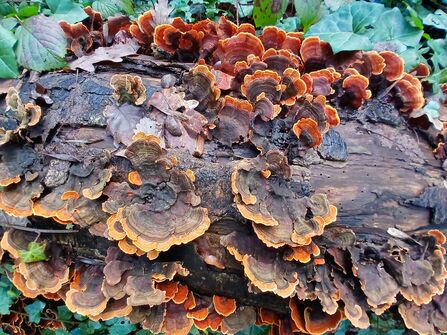
Fallen deadwood supporting fungi growth
Photo credit: June Jackson
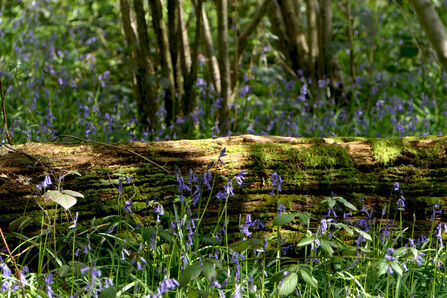
Fallen deadwood
Photo credit: Val Borrell
Different types of deadwood found in Sydenham Hill Wood and Dulwich Wood
Standing deadwood

Standing deadwood
Photo credit: June Jackson
The rarest form of deadwood is trees which are still standing. Standing deadwood could be a tree that is completely dead, or a living tree with sections of deadwood. This form of deadwood offers incredibly important habitat to some wildlife species that can’t live anywhere else.
Fallen deadwood

Fallen deadwood
Photo credit: Sam Taylor
Branches and trunks which have fallen naturally, bark, or even wood that has been felled.
Decaying stumps and roots

Decaying deadwood stump
A large amount of deadwood can be found underground in decaying stumps and the network of underground roots that remain after a tree has fallen. Stumps found above ground, as well of the root plates of fallen trees can also provide valuable deadwood habitat over time.
Rotting heartwood

Tree hollow
Photo credit: June Jackson
The heartwood of a tree is the older, harder, central wood. As veteran and ancient trees age, their trunks begin to hollow as this heartwood at their centre decays.
Why is deadwood important?
Deadwood is an essential part of a healthy woodland ecosystem; it plays a key part in creating nutrient-rich soil and supports the biodiversity of the woodland habitat.
Nutrient recycling and soil quality
As dead trees decompose with the help of fungi, insects and microorganisms, nutrients are slowly released back into the soil. These nutrients can then be used again by other trees and plants to support new growth. Through this natural recycling system, as one tree dies it gives life to another.
Homes for wildlife
Deadwood provides a range of microhabitats - Cavities, cracks, loose bark, tunnels, rot holes and decaying roots all create different conditions that different species can use. Some wildlife feed directly on deadwood and the species it supports, while others use it for shelter, nesting, breeding or developing through different stages of their life cycle.
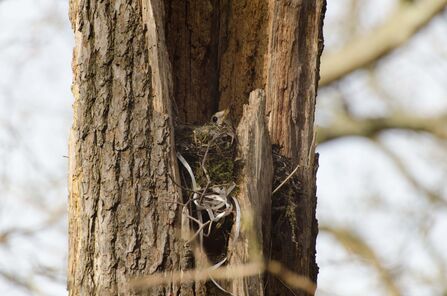
Bird nesting in tree hollow
Photo credit: Daniel Greenwood

Wood mouse
Photo credit: Margaret Holland
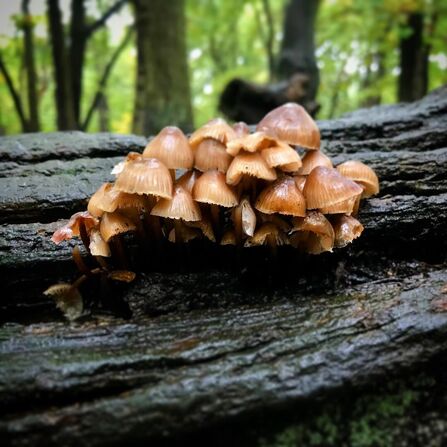
Fungi growing on fallen deadwood
Photo credit: Chris Canelle
Wildlife our deadwood supports
Birds

Great spotted woodpecker © Mark Hamblin/2020VISION
Dead trees and branches provide important nesting and feeding habitat for many woodland birds. Woodpeckers can excavate nest holes in decaying wood, while species such as nuthatches can make use of existing cavities.
Mammals

©Tom Marshall
Bats can use natural features in trees such as rot holes, cracks, cavities and loose bark as roosting places. Some species will also make use of old woodpecker holes.
Hedgehogs and other small mammals can shelter among fallen branches, tree roots and stumps, while deadwood also provides places to hunt for the insects and other invertebrates they feed on.
Insects

Stag Beetle ©Terry Whittaker/2020VISION
Deadwood is particularly important for saproxylic invertebrates – creatures that depend on dead or decaying wood for at least part of their life cycle. An example of saproxylic invertebrates are stag beetles, whose larvae depend on old trees and rotting wood to live in and feed on as they develop over up to six years.
Amphibians

Common toad at Centre for Wildlife Gardening © Daniel Greenwood
Near our ponds in the Woods, fallen logs, stumps and piles of woody material can provide damp, sheltered places for frogs, toads and newts to shelter and overwinter
Fungi

Candlesnuff Fungus ©Margaret Holland
Deadwood provides a nutrient-rich habitat for many species of fungi, which in turn play an important role in the decaying process of deadwood. Fungi which live on deadwood can cause the wood to break down via the secretion of enzymes.